

COLOR


SEARCH

28/10/2025
Yes to Access Editor
Driving Inclusion: Sensitising Bus Staff for Accessible Public Transport
When we talk about accessible public transport, we usually think about ramps, lifts, and wheelchair spaces. But here’s what we learned: even the best infrastructure fails if bus staff don’t know how to use it or help passengers who need it.
A bus driver who doesn’t know how to deploy a ramp properly. A conductor who gets impatient with a passenger who takes longer to board. Staff who avoid eye contact with passengers with disabilities because they feel uncomfortable. These everyday interactions create barriers that no amount of inaccessible infrastructure can fix.
That’s why training and sensitizing transport staff is essential. They’re the ones on the ground, interacting with passengers every day. If they understand disability and know how to provide good service, accessibility becomes real, not just theoretical.
At Yes to Access, we decided to focus our efforts here—on training the people who run the buses.
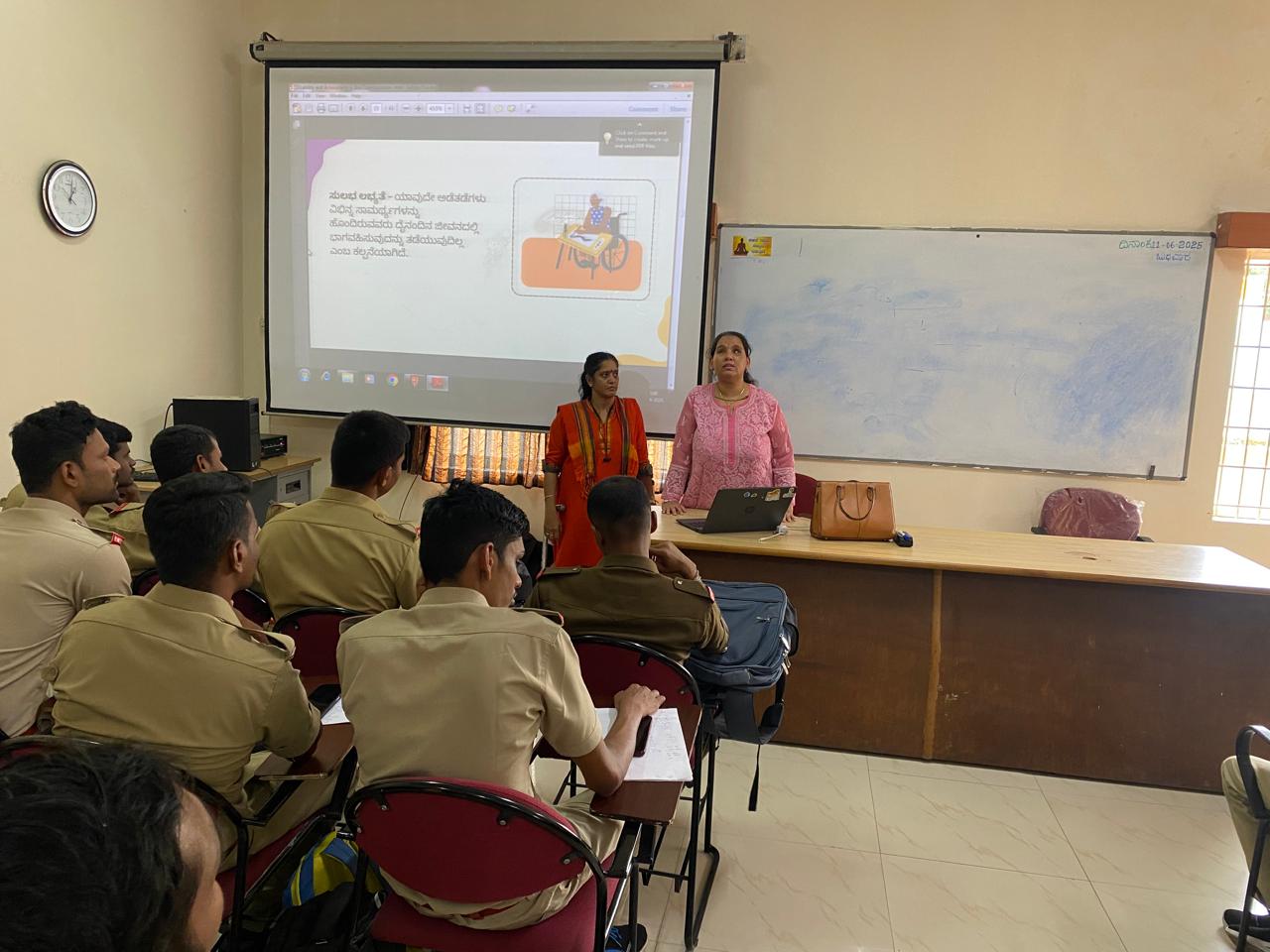
We started with BMTC in Bangalore. Mr. Prabhakar Reddy, the Chief Traffic Management Officer, agreed to let us train new employees. With support from the World Resources Institute, we conducted training sessions from June to September and reached 1,474 BMTC staff members.
The training covered basic but important topics: how to assist passengers with different disabilities, why accessibility matters, and what good service looks like.
KSRTC, the state transport corporation, noticed our work and wanted the same for their employees. Dr. Nandhinidevi K (IAS) and Dr. Latha Kumari helped us set up training sessions. We trained 305 new KSRTC staff members.
Not everyone will remember everything from the training, and not everyone will change immediately. But many will, and that makes a real difference for passengers with disabilities who use public transport every day.
Good infrastructure is important—we need accessible buses, ramps, and clear announcements. But we also need staff who know how to provide good service to all passengers. Our training programs help make that happen.
Share


Related Blogs
Our Partners