

COLOR


SEARCH
23/12/2025
Yes to Access Editorial
Events
Digital Accessibility in India: Beyond Compliance-Webinar Summary
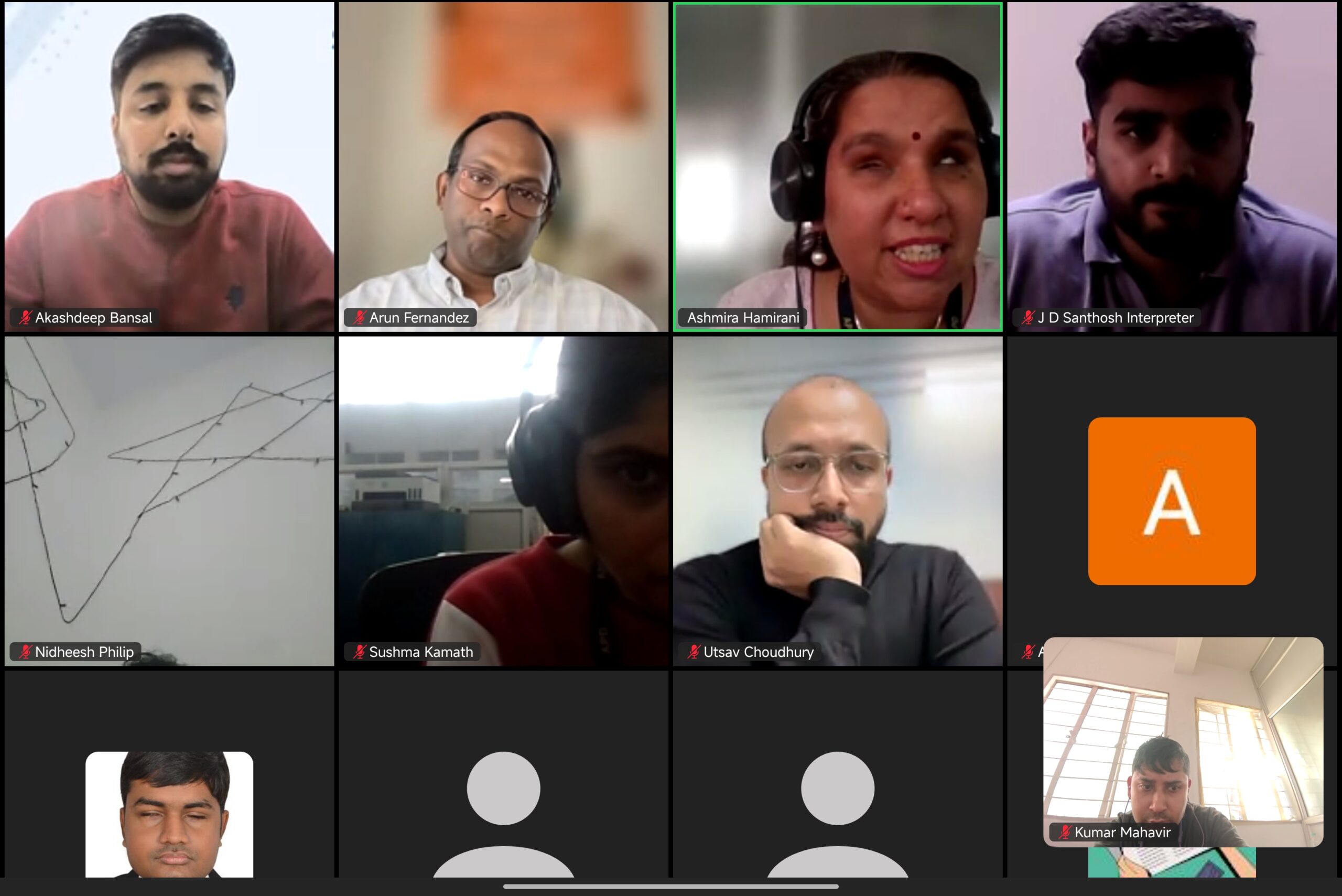
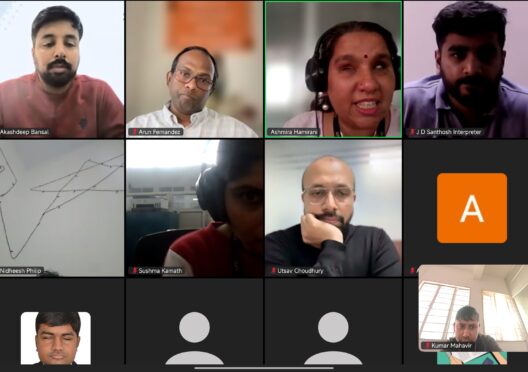
On December 12, 2025, the Research and Development Team of Yes to Access Project at the Association of People with Disabilities (APD) convened a webinar highlighting a critical discussion on the state of digital accessibility in India. The impetus for the meeting was a stark reality check shared by the event host, Ashmira Hamirani.
Despite months of advocacy and outreach to numerous organizations, the response has been lukewarm. “We have realized that for most organizations, accessibility is simply not a priority,” Ashmira noted during her opening remarks. “While some are willing to make incremental changes, the agenda of 100% accessibility is rare. In the last six months, only the Nudge Institute and IIT Kanpur have truly stepped up to make significant changes.”
The webinar brought together a panel of experts to dismantle the barriers—legal, technical, and attitudinal—that are slowing down India’s progress in digital accessibility. One of the most significant shifts discussed was the move away from WCAG guidelines to a more comprehensive IS 17802 . Sai Darshan Bhagat, a scientist at CDAC and a core member in drafting India’s new standards, explained why relying on global benchmarks like WCAG was insufficient. “We previously lacked a single, unified document for ICT accessibility,” Sai explained. “We had guidelines scattered across different policies, but nothing that covered the full spectrum of products. IS 17802 changes that. It covers everything—from websites and apps to ATM machines and ticket terminals. With the recent amendment to the RPwD Act, this standard is no longer optional; it is a legal mandate.”
Sai also addressed the technical gap in testing. “Many global tools do not test for Indian parameters. That is why we developed ‘Satya’—a smart accessibility testing tool. It is currently the only tool in the market that provides compliance reports based specifically on IS 17802.”
Even with these standards in place, compliance remains low. Amar Jain, co-founder of Mission Accessibility and a corporate lawyer, provided a candid assessment of the legal landscape. “It isn’t necessarily that organizations are choosing to pay fines over complying,” Amar clarified. “The issue is a lack of monitoring. We do not have a central authority in India dedicated to monitoring accessibility compliance. Furthermore, a penalty of five lakh rupees is negligible for a large enterprise.” Amar also issued a challenge to the disability community regarding advocacy methods. “We have complained enough on Twitter and social media,” he argued. “But I have hardly seen people writing to the actual regulators through proper, formal channels. Regulators often tell us they haven’t received a single formal complaint about inaccessibility. It is equally in our own interest to become self-advocates and use the legal mechanisms available to us.”
The conversation also touched on the operational challenges within urban governance. Utsav Chaudhary from the National Institute of Urban Affairs (NIUA) highlighted the immense pressure city administrations face. “Cities are complex organisms that are often in ‘firefighting mode,’ which makes digital accessibility an afterthought,” Utsav observed. “We need to shift our approach. As experts, we often take a confrontational route when we see errors. Instead, we need to be allies. We must help cities navigate the path of least resistance toward inclusivity, rather than just pointing out what is wrong.”
Akash Deep Bansal, a member of the Ministry of I&B committee, discussed the push to make entertainment accessible, highlighting a profound irony in why improvements are slow in the media sector. “We are often told by stakeholders that they aren’t receiving enough complaints about inaccessible content,” Akash said. “But I have argued that the complaints aren’t coming because, unfortunately, the complaint systems themselves are inaccessible. How can we expect a person with a disability to report an issue when the mechanism to do so is not designed for them?”
Finally, Arun Fernandez, founder of D-Learners, reminded the panel that accessibility features often viewed as “specialized” are actually universal needs. “Something as simple as text-to-speech integration isn’t just a feature for the visually impaired,” Arun stated. “It is a lifeline for individuals with Specific Learning Disabilities (SLD). If top management takes a collective call to implement these basic features, we aren’t just helping one group; we are improving the digital experience for everyone.”
As the session drew to a close, Kumar Mahavir from the Yes to Access team delivered the formal vote of thanks. He expressed gratitude to the speakers for their invaluable insights and acknowledged the APD leadership for their unwavering support in making these advocacy initiatives possible.
The consensus was clear: the tools and laws are in place. The next phase requires a strategic shift from general awareness to collaborative action. APD invites all practitioners and organizations to join in this mission.
Share


Related Blogs
Our Partners