COLOR


SEARCH
The case for Digital Accessibility
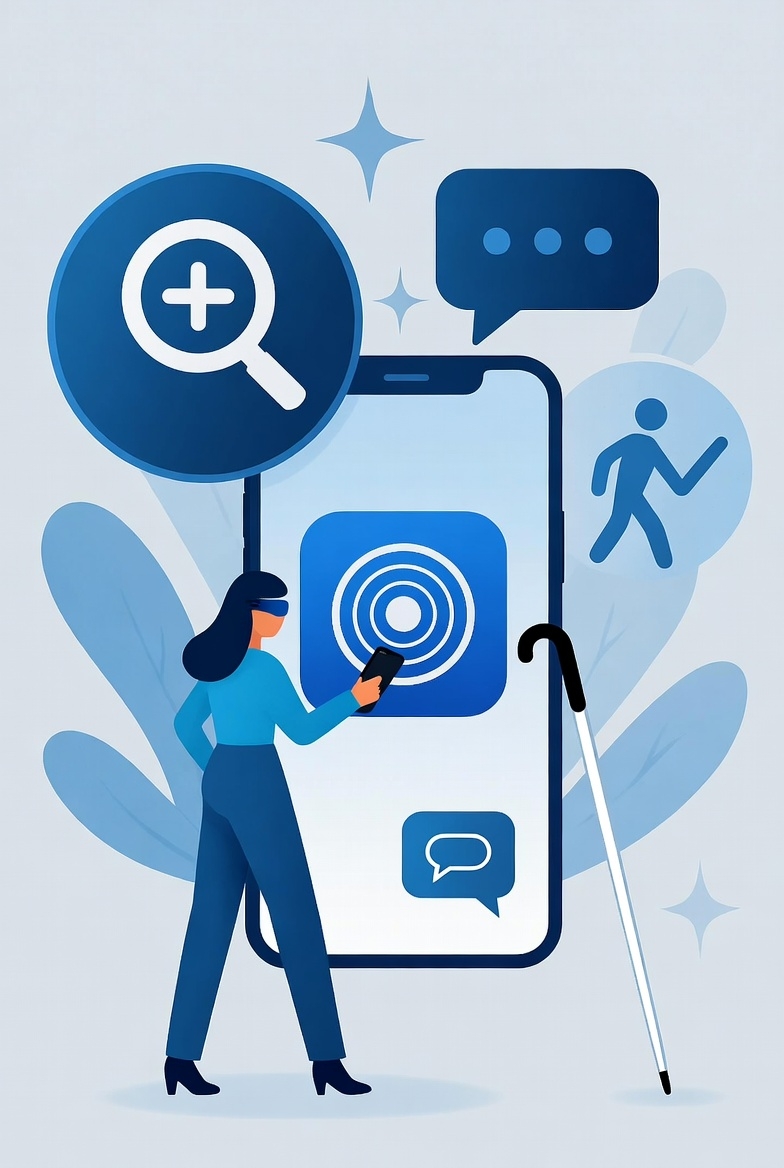
Imagine that you want to scroll an app to shop for vegetables, the process is simple, open the app, select the vegetables, make the payment and place the order. But for a large number of people this process is not so seamless. Consider the example of a person with visual impairment, they have to open the app for shopping and select the vegetables; this is easy if the screen reader on the phone both in Android and IOS, is able to read each vegetable then it is easy to select, however the user might find it difficult to select if the screen reader does not read the complete information. If even the person ends up selecting the vegetable then there are problems at the payment stage because many times the buttons don’t get clicked, so while I might have selected the vegetables I might not be still able to buy them because I am not able to make the payment. This is an everyday story of me and millions of users like me. This issue is directly linked to digital accessibility.
An app or a website is digitally accessible when a person with a visual impairment, people with cognitive difficulties and the elderly are able to access them seamlessly without the use of any third party software. According to the world health organization there are 62 million people in India who have a visual impairment, out of which 8 Million are blind. India has the largest population of people with visual impairment in the world. India is also seeing a high number of growth in the elderly population, according to the WHO 46 percent of those above the age of 60 will develop one kind of disability or the another. Some of the common disabilities are hearing impairment, loss of sight, memory etc. this makes digital accessibility of apps and websites all the more important, because if digital platforms are not accessible then companies are leaving a large consumer base out just by not making their apps/websites accessible, which is a fairly simple task to do. It is believed that people with disabilities are not a significant enough number as buyers, but people with disabilities are the largest minority in the world. Come on guys, we too love window shopping!
The rights of Persons with Disabilities act 2016 states that websites should be accessible to all. We have the WCAG 2.1 guidelines which are mandatory according to the act, along with the IS 17802 guidelines which are specific to India.
In the course of our work at APD we conduct digital audits of websites under the Yes to Access project, we have found that websites of top corporates, financial services such as banks, IITS and IIMS are not accessible. This leaves a person with visual impairment completely out of the educational and financial systems leading to marginalization and dependency.
A recent report by BarrierBreak and NCPEDP revealed that a significant majority of Indian financial websites are inaccessible to people with disabilities. The report, titled “Digital Accessibility Landscape of the Finance Sector in India,” found that 91.55% of the 100 leading finance websites surveyed failed to meet basic accessibility standards. However, it is important to mention here that some organisations like IIT Kanpur have been proactive in making the change within a span of one day, from 188 errors to 20. Whereas other organisations like Access bank, Voltas and the nudge institute have started internal discussions and appointed people to audit their website to make it accessible. Along with this Wipro’s website was found to be accessible.
Accessible websites are not just useful for a person with a visual impairment but are very important for a person with learning or cognitive difficulties and the elderly. Websites should be simple and intuitive. I hope that we will be able to see more initiatives from the corporates, governments, educational institutions, health care services and financial services to make their websites accessible to all. This will make us truly independent and open the doors to freedom.


Related Blogs





Our Partners