

COLOR


SEARCH
06/05/2026
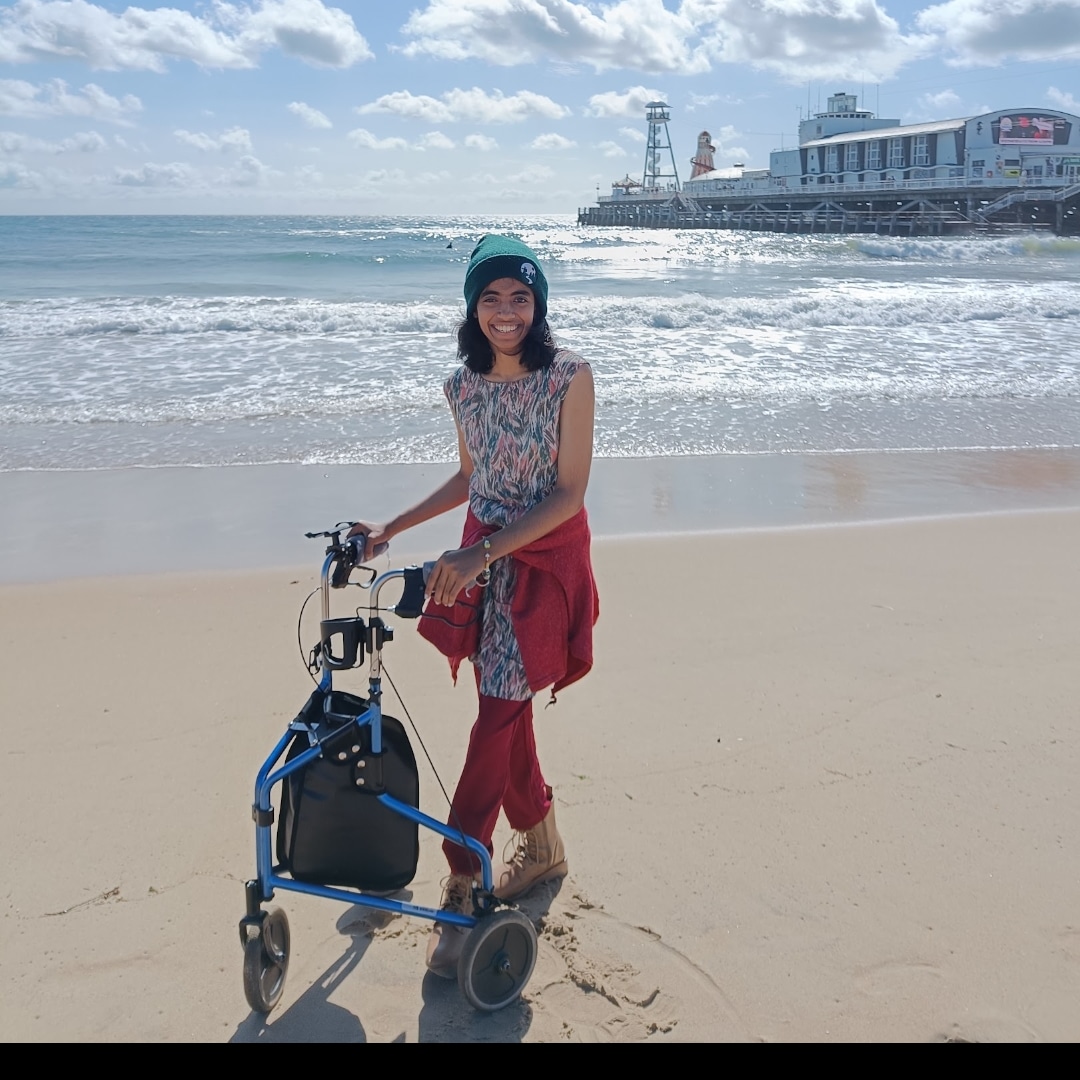
Aishwarya Balasubramanian
Access Adda Blog Competition
On the intersections of Disability, Desires, Gender, and Intergenerational Trauma
Understanding, validation and belonging are some of the most sensitive, fierce and adamant needs for each of us, I would like to imagine. Inside the spectrum of desire, we crave for someone to really see us, someone to really want to understand our minds, someone to gently cherish our hearts, but with certainty and for me, also reassurance, playfulness and awareness. I want my disabled body to not be treated lightly. My body is not yours to define according to your standards. My body always belonged to me, since my birth, though it took me more than two decades to reach this space inside myself.
‘Do you have trouble walking? What happened to you? Did you meet with an accident? Are you paralyzed? Why would god do this to such a beautiful girl? Have you tried yoga / meditation / exercises / positivity? Why don’t you shave your underarms? Did you put on weight? You look darker than last time. You mustn’t talk back to your parents. And so on, ableist, patriarchal, body and skin fearing bullshit (ableism: a really messed up, eugenic, apathetic, disconnected, invasive, disorienting, labelling, claustrophobic oppressive structure) goes on.
I grew up in an environment where no one sat down with me and explored my disability together with me. I was left alone to grasp the concept, process my body needs and fumble into the many, many layers of my complex life with disability. I used to feel like it was a taboo, something bad, something embarrassing, like the blood shed during periods, you know? Neither periods nor my disability is shameful. Shameless are the societies who make you feel so.
India fails to accommodate me because it deeply fails to recognize how magnificent, multilayered and intersectional are disabled bodies. It caters to able-bodied / non-disabled people. People who are fit, always active, always available with labour, always efficient, always quick on the uptake, who fall under the dominant standards of beauty and desirability etc. As a child, I had no one who made me feel normal. I have been looked at with nosy eyes, prying mouths, intrusive questions and humiliating bureaucracy to obtain government approved disability certificates, the process of which has been painful, exploitative, ableist, uncompassionate, undignified – confining me into mocking percentages. I carry a ‘Unique Disability ID’ inaugurated by Prime Minister Narendra Modi that I would love to burn into ashes. The government views us as ‘Divyang’ and so does many sign boards and restrooms across this country. This slur of a word means ‘god’s body part or divine parts’ and contribute to people believing we are some special people to take inspiration from, and people whose endurance is tested. I urge you to do your own research behind this term coined by Modi.
It has taken me a long journey, to return to my body, and to begin holding my disability with dignity.
Folks with disabilities are not a pity case. We are not vessels to be exploited. We are not curses passed down to families. We are not our family’s punishment. We are not insufficient. We are not incomplete. We are whole beings. We are human beings with a spectrum of emotions. We are layers of colours and desires. We have sexual needs. We crave romance. We might not want certain forms of intimacy. We want allies. We want solidarity. We want you to unlearn your biases in your own time. We want equity.
I want this world to know ‘I am not interested in your cures for us’. Who gave you the right to call us damaged?
It all starts with dignity, care, and consideration. I do not want anyone’s advice on my body. I am intuitive, perceptive, and very curious. I love disrupting norms by asking questions and making art. Whenever I am bubbling with rage, a poem comes out of me. I carry wisdom from my lived experiences. All my fears, wounds and unmet needs do not make me weak. They have given me the courage to embrace my sensitivity and wants even more. It takes courage to feel in this world. It takes conscious practice of actions to unlearn rigid teachings that have created power imbalances, fear towards certain bodies and discouragement of ways of living that defy common expectations.
Accessibility is both personal and political to me. It is fluid. It becomes a meeting space where you and I can connect equally. It is a spectrum of care and recognizing that disabled bodies were never wrong or unusual. I take pride in my disabled body as she keeps showing me new ways to understand love, desires and dreams.
Share


Related Blogs
Our Partners