

COLOR


SEARCH
03/03/2026
Abhiruchi Das
Events
Purple Manthan 2026: A Decade of the RPwD Act (2016)- From Promise to Practice
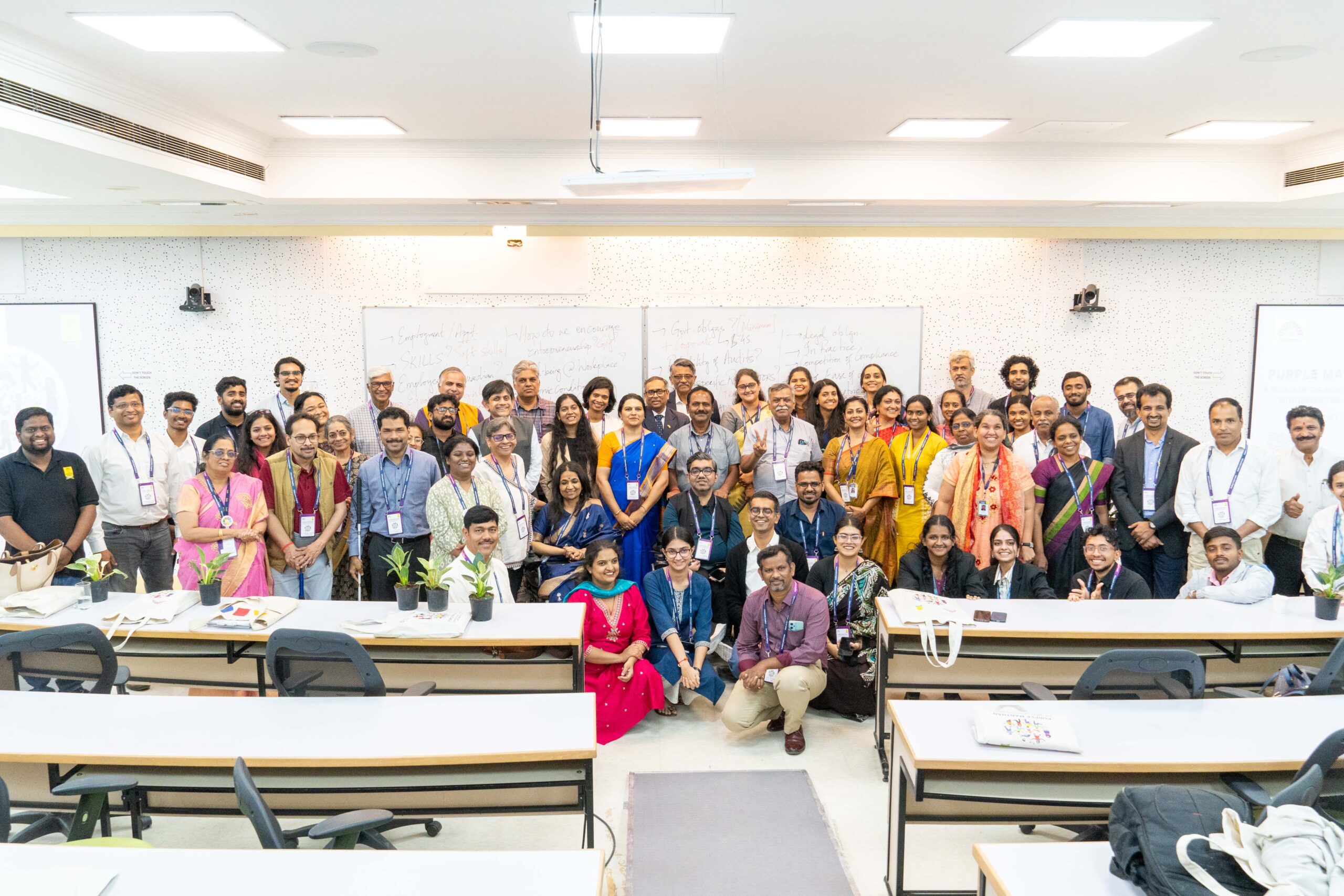
On 20 February 2026, the MDC Hall at the Indian Institute of Management Bangalore became a space for reflection, critique, and forward-thinking dialogue as the Association of People with Disability (APD), in partnership with IIMB, convened Purple Manthan: Decade of Disability Inclusion. Marking ten years of the Rights of Persons with Disabilities Act, 2016, the event examined a central question: Has India’s disability inclusion journey moved from policy promise to lived reality?
Setting the Context: Law, Constitution, and Collective Responsibility
Opening the event, APD’s Honorary Secretary, Mr. Jacob Kurian emphasized that while the RPwD Act was a milestone, legislation alone cannot guarantee inclusion. Accessible schools, workplaces, and public spaces are essential to realizing constitutional promises of equality and dignity. The keynote address by the Guest of Honour, Mrs. Manmeet Nanda, Additional Secretary, Department of Empowerment of Persons with Disabilities (MoSJE) reinforced this rights-based framing. Inclusion, she stressed, is not charity; it is a constitutional obligation. She called for stronger enforcement, sectoral unity, and responsible use of emerging technologies such as AI to advance accessibility.
The inauguration also featured the launch of APD’s Accessible by Design (A Practical Resource Guide) – Module 2 on Accessibility in Educational Institutions. The Resource Guide comes with disability inclusion thought frameworks, design pathways, checklists and cost calculations to help schools, colleges, universities and research institutions to embed accessibility in infrastructure and campus life to bridge the gap between statutory mandates and everyday inclusion.
Livelihoods: Beyond Hiring to Career Mobility
The first session examined inclusive economic participation. While corporate India has made visible progress in hiring persons with disabilities, stagnation persists at leadership levels. Speakers emphasized that inclusion must be measured through retention, promotion, and governance participation, not by calculating entry-level hiring numbers.
A major concern was the ‘education funnel.’ Although thousands of seats are reserved in higher education, foundational gaps in primary schooling severely limit access. Long-term CSR engagement, AI-driven personalized learning, and large-scale upskilling aligned with emerging sectors were identified as urgent priorities.
Technology emerged as a powerful enabler. AI-powered communication tools, assistive devices, and digital platforms are expanding independence and professional participation. Yet, the message was consistent: technology cannot substitute for institutional intent. Accessibility standards such as Web Content Accessibility Guidelines (WCAG) must be properly implemented and backed by dedicated budgets.
Accessibility: From Checklist to Dignity
The second session reframed accessibility as a question of dignity and governance not just physical infrastructure. Data from accessibility audits revealed alarming gaps suggesting that ramps and ‘accessible’ washrooms often fail functional usability standards. Panelists highlighted weak ownership within local governing bodies, fragmented enforcement, and superficial compliance.
The discussion called for mainstreaming Universal Design principles through stronger implementation of existing legislation like the National Building Code. A proposal for an Accessible Quality Index (AQI) gained traction as a measurable benchmark for institutional performance. Crucially, accessibility certification must move beyond checklists to lived-experience validation, supported by a trained professional cadre of auditors.
Governance, Data, and Accountability
The final session emphasized systemic reform. Institutions often act reactively, strengthening policies only after complaints arise. Structured internal mechanisms, clear equal opportunity policies, and self-declaration compliance models were recommended.
Reliable and disaggregated data emerged as foundational. Historical undercounting of ‘invisible’ disabilities has limited policy effectiveness. Cross-departmental integration and linkage with Unique Disability ID (UDID) systems can improve traceability and service delivery. Speakers also advocated for dedicated disability budgeting across departments to move beyond welfare silos.
A powerful philosophical shift surfaced through the idea of “Reverse Integration” by reframing disability as part of natural human diversity rather than a minority category requiring accommodation.
The Road Ahead
The consensus at Purple Manthan 2026 was clear. India has built a progressive legal architecture which must be clubbed with enforcement, measurable accountability, leadership mobility, and cultural maturity for the next decade.. The government must lead on infrastructure and regulation, while corporate ecosystems must normalize inclusive leadership.
True inclusion will be realized when accessibility is no longer treated as exceptional, but embedded into organisational systems, cross-sectoral structures and state mechanisms that together uphold equal rights and everyday dignity.
Share


Related Blogs
Our Partners